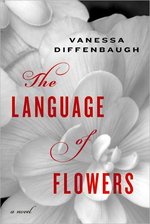
The Language of Flowers by Vanessa Diffenbaugh

This book was recommended by Book Passage and I am glad I read it. The Language of Flowers is set in San Francisco and tells the story of Victoria, an emancipated foster child, who has spent her whole life in foster care. It shines a light on the cruelty of the foster care system and the abruptness in which the system dumps a young adult once they turn 18.  Victoria is happy to be free of the system and immediately pursues her passion: flowers. The image of this young woman who has not been nurtured save one foster mother who taught her about flowers is now nurturing the earth. The author does an excellent job conveying the challenges for foster children, especially the heartbreak. She speaks from experience as Diffenbach is an advocate for foster children and she was a foster mother. In fact, some of the proceeds from this book will go for the Camellia Network,  a support net(work) for youth aging out of foster care.
But  flowers are easier than people. Armed with  defense mechanisms because of the life she led in the foster care system, Victoria is a survivor. There is sadness, frustration and glimpses of hope. She attracts good people who want to be helpful, but for Victoria, help doesn’t look the same to her as it does to most people. She longs for connection and family but is afraid of loss so she is in limbo- wanting but rejecting. Victoria’s story is told in alternating chapters of her life now and the past. Slowly we find out the explosive story of what happened between Victoria and the foster mother who was planning to adopt her. The foster mother teaches her about flowers and unconditional love, but something happens to stop the adoption. The story is brutal and creates a Victoria who is not always likeable, but you understand.

“The overriding emotional message of “The Language of Flowers” has to do with family. Victoria desperately wants one. But she thinks that she is too damaged to learn how to love. A likelier outcome:  a great big bouquet of aster (patience), daffodil (new beginnings), honeysuckle (devotion), hyacinth (constancy) and moss (maternal love) will await her in the flowery future “( Maslin, September 7,2011, N.Y. Times Book Review).

There are several themes in the book. The book uses the language of flowers, a Victorian era method of communicating through flowers, and provides a flower dictionary for the reader in the back of the book. I learned alot about the meaning of flowers and Victoria’s skill at arranging flowers attracts many followers. Themes of homelessness, attachment disorder and foster care are just a few of the other topics. Yet, in spite of all the sadness and cruel twists it does leave you with hope. That’s my 2cents, Tracy.
The Snow Child by Eowen Ivey

Wow! Read the Snow Child by Eowen Ivey. This story is part Russian fairy tale and part history of homesteading in Alaska in the 1920s.  Set in the beautiful but hostile terrain of Alaska, Mabel and Jack arrive at their new home with the hope and the plan to start over, to leave the pain and sadness of infertility, loss and begin again. Very slowly as they tame the land they find each other again and recapture their love.

At the beginning of the book in the first snow the couple playfully build a snow child. The next morning the snowman is gone, but left behind are a child’s footprints that lead into the woods. Later that evening a young girl shows up on their doorstep. “Wild, secretive, this little girl, who calls herself Faina, seems to be a child of the woods. She hunts with a red fox at her side, skims lightly across the snow, and leaves blizzards in her wake. As Jack and Mabel try to understand this child who seems to have stepped from the pages of a fairy tale, they come to love her as their own daughter. But in the Alaska wilderness, life and death are inextricable, and what they eventually learn about Faina changes their lives forever” (Ivey, The Snow Child ).

The magic in this story is that things do not end up where you think they will, and I liked that the story moved in directions I did not expect. Ivey’s writing captured my senses. I felt the cold crispness of the winter and the isolation experienced by the people who inhabited this frontier.  She is able to convey the interdependence we have on each other and the land. Ivey creates the warmth of a fire on a cold night and the comfort taken by the neighbors on the hearth of friendship. I learned that there is magic in simple things and the support of each other.

And that is my 2 cents, Tracy.

Shadow of the Titanic by Andrew Wilson

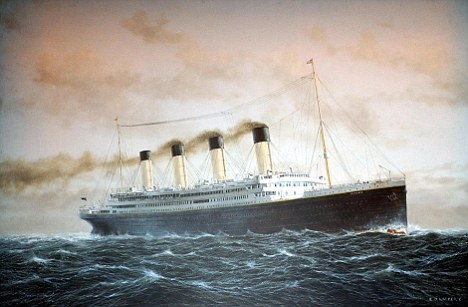
Reading this non fiction book seemed very timely given my recent review of fiction book The Lifeboat by Rogan (post 4/18/12).  Shadow of the Titanic is a fascinating story about what happened to all of the survivors from the Titanic. There were 705 survivors and very little has been written on what happened to these survivors. Andrew Wilson, the author, cites unpublished letters, diaries, and interviews with survivors’ family members to tell us about the many ways the Titanic “shadowed” the men, women and children who lived through that disaster. Some of the survivors were so racked with guilt they spend the rest of their lives under the “shadow of the Titanic”, thus the title. Yes, there were the  rich and famous, but so many people from all walks of life were traumatized by the loss  of the Titanic, a few even committed suicide.

Another aspect of the disaster was that with the shortage of lifeboats it was a given that women and children were suppose to be first in the lifeboats. It was an unwritten rule that men would go down with the ship, not just the captain and crew, but that a true gentleman would be guided by this rule. There were men whose reputations were destroyed because they did not go down with the ship. The public scrutiny of the survivors in the aftermath of this tragedy makes for  a very interesting read and I recommend it.