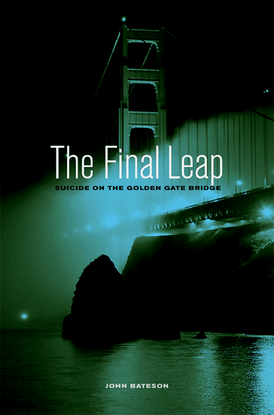
The Final Leap, Suicide on the Golden Gate Bridge by John Bateson

The Final Leap by Bateson is about the Golden Gate Bridge and its legacy as the suicide destination. The bridge is beautiful but deadly. Bateson explores the history of the Bridge and the 1500 plus people who have taken their life by jumping from the Golden Gate Bridge. He weaves the drama, the tragedies and the politics of the bridge. I learned many facts I was unaware of- the San Francisco coroner will not rule a death a suicide unless the act is witnessed; the autopsy will say death by fall. Marin County coroner on the other side will rule  a death a suicide if the body is located in the water by the bridge and there is evidence that supports death by a fall.

An interesting fact is that for the small percent of jumpers that survived, there were no further suicide attempts by them. Those who jumped and survived reported immediate regret for jumping. Most survivors jumped because it “required no planning…didn’t need to procure a gun, hoard pills, get a rope, and did not have to worry about leaving a mess at the scene” (page.16). Motivation and the bridge make it easy with its design plus, the refusal of officials to place a safety barrier, as noted by the opinion piece below:

“The Golden Gate Bridge is a public health hazard; it doesn’t have adequate safety barriers. The Eiffel Tower, the Empire  State Building, St. Peter’s Basilica, the Duomo in Florence, the Sydney  Harbour Bridge and many other international landmarks have suicide barriers. But  not the Golden Gate Bridge.

Ironically, the original design called for a higher railing along the walkways specifically to prevent suicides. In a last-minute decision, however, the railing was lowered to enhance the view. As a result, almost anyone can climb over it, from a 5-year-old girl (the bridge’s youngest suicide, in 1945) to the 75-year-old overweight woman who jumped in 2005. Or be thrown over it: Three children were murdered that way by their fathers, who jumped after them to  their deaths (one in 1964 and two in 1993).

In 2008, bridge district officials finally voted to add a suicide deterrent to the bridge: a marine-grade stainless steel net that will stretch 20 feet below the walkways. It won’t be much different than the net that the bridge’s chief engineer, Joseph Strauss, installed to protect workers during construction — a net that saved 19 men” (Los Angeles Times May 25, 2012).
This book changed my opinion. As a psychiatric nurse who witnessed the determination of  many to kill themselves, I did not think the barrier proposed for the Bridge to prevent suicides would make a difference.  People committed to dying will still try to kill themselves but just at another location. But a barrier or net would save lives and will not cost anything to the beauty of the bridge.

Bateson writes from many perspectives- the coroners, the coast guards, the police, the families of the victims, the counselors, the survivors who somehow miraculously  live despite the fall,a movie producer who filmed the suicides on the Golden Gate  for a year, and witnesses. The anatomy of the injuries that are sustained from a fall of that height: 220 feet, 4 seconds from the bridge to the bay. The Bridge is a documentary about the suicides  captured by film over a one year period and the footage highlights the  impulsivity. I went to the author’s reading and discussion of his book at Book Passage was touched by his compassion and methodical presentation  of why there needs to be a barrier to stop suicides. I agree…that’s my 2cents, Tracy.

Shadow of the Titanic by Andrew Wilson

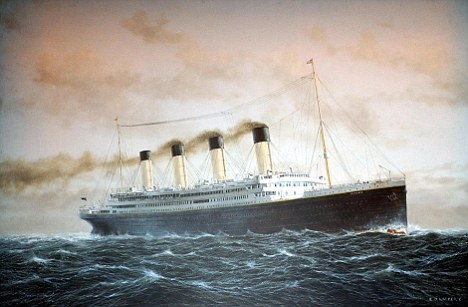
Reading this non fiction book seemed very timely given my recent review of fiction book The Lifeboat by Rogan (post 4/18/12).  Shadow of the Titanic is a fascinating story about what happened to all of the survivors from the Titanic. There were 705 survivors and very little has been written on what happened to these survivors. Andrew Wilson, the author, cites unpublished letters, diaries, and interviews with survivors’ family members to tell us about the many ways the Titanic “shadowed” the men, women and children who lived through that disaster. Some of the survivors were so racked with guilt they spend the rest of their lives under the “shadow of the Titanic”, thus the title. Yes, there were the  rich and famous, but so many people from all walks of life were traumatized by the loss  of the Titanic, a few even committed suicide.

Another aspect of the disaster was that with the shortage of lifeboats it was a given that women and children were suppose to be first in the lifeboats. It was an unwritten rule that men would go down with the ship, not just the captain and crew, but that a true gentleman would be guided by this rule. There were men whose reputations were destroyed because they did not go down with the ship. The public scrutiny of the survivors in the aftermath of this tragedy makes for  a very interesting read and I recommend it.

Someone Knows My Name by Lawrence Hill & Escape from Slavery by Francis Bok

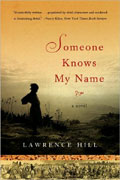
Slavery still exists, both in the past and in the present. The first  book to read is one from my 2010 book list that is worth revisiting. Someone Knows My Name by Lawrence Hill is steeped in facts about slavery in America and some information was completely new to me: the establishment of a colony of freed slaves, Black Loyalists, in Nova Scotia with the help of the British during the war between the Colonies and King George. Did anyone out there know that?  Hill tells this important history through Meena, an African woman, who recalls her experiences of slavery and freedom to abolitionists in London.

Kidnapped from Africa as a child, Aminata Diallo ( Meena) is enslaved in South Carolina, but escapes during the chaos of the Revolutionary War. She tells her story from the days of growing up with two loving parents in a small village ( in what is now Mali) then her capture by another tribe and sold to whites on the African coast. Her recounting of the slave ship and the arrival in America is detailed and very sad. Eventually she finds “freedom” in Manhattan, she becomes a scribe for the British, recording the names of the blacks, The Book of Negroes, who have served the King and earned their freedom in Nova Scotia. But the hardship and prejudice of the new colony prompt her to follow her heart back to Africa, then on to London, where she testifies about  the injustices of slavery, her life story and helps the abolitionist movement in Britain. It is a story that no listener, and no reader, will ever forget!  ( From Freedom to Slavery, by Nancy Kline, NY Times Review, Jan. 20, 2008).

But if you think slavery is a part of the past, please read the next recommendation! Escape from Slavery by Francis Buk is his account of enduring 10 years of slavery in the Sudan. It is a riveting narrative and heartbreaking. I read his book before I heard him speak at  Marin Catholic High School . He is a gentle, very humble, man who chooses not to forget those who still remain in slavery into today’s modern world.  Francis Buk is one of my heroes. He  bears witness to the slavery that exists today and is committed to ending it.

Seven Year old Francis Piol Bol Buk was living with his family on a farm in southern Sudan. One day in 1986, he was sent by his mother to sell eggs and peanuts in the marketplace. There in a slave raid, he was kidnapped from his contented life and thrown into a difficult, horror filled existence in slavery by rich Muslim Arab farmers in Northern Sudan. Buk’s family was  murdered during the raid. He lived in a barn with animals for ten years and forced to work for the owners. He escaped at age 17, and made his way to Cairo and became a UN refugee. He was resettled in the U.S. in 1999. He adjusted to life in US but could not forget the life he left behind in the Sudan. The persistence of slavery in the modern world can’t be ignored and Buk is committed to helping free slaves and free southern Sudan from the Arabs in North Sudan. Buk worked with an American antislavery organization and testified before Congress about the atrocities in the Sudan. Now Francis Buk is working on building a school in the new southern State of Sudan and ending slavery.

Today the estimates for slavery is upwards of twenty-seven million people which includes- child labor, human and sex trafficking, forced labor and chattel slavery. Slavery exists in Haiti, Sudan, Nigeria, Pakistan, Thailand to name a few, and many other places in the  world. America and Europe contribute to slavery by ignoring or purchasing from groups/ countries that benefit from slavery’s economy.(map) Thank you  Francis Buk, Aminata Diallo  and Lawrence Hill for sharing your history and stories. And that is my 2 cents for today, Tracy.

Even Silence has an End by Ingrid Betancourt

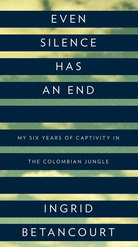
Even Silence has an End by  Ingrid Betancourt  (Born in Bogotá, raised in France, Betancourt at the age of thirty-two gave up a life of comfort and safety to return to Colombia to become a political leader in a country that was being slowly destroyed by terrorism, violence, fear, and a pervasive sense of hopelessness. In 2002, while campaigning as a candidate in the Colombian presidential elections, she was abducted by the FARC. Nothing could have prepared her for what came next. She would spend the next six and a half years in the depths of the jungle as a prisoner of the FARC. Even Silence Has an End is her deeply personal and moving account of that time. Chained day and night for much of her captivity, she never stopped dreaming of escape and, in fact, succeeded in getting away several times, always to be recaptured.) Took my breath away. I can’t imagine her experience and the days of waiting for rescue. The betrayal of her to the rebels is also an insight into petty and dangerous politics. Some of her comments are worth noting here from an NPR interview:

“We discovered that the jungle was another prison,” she says. “It was impossible to just get out.” But she kept trying, five times in all. And after her fifth attempt, the guards had had enough; they beat her severely and kept her chained by the neck to a tree, 24 hours a day.

The brutal treatment did not break Betancourt’s spirit. Over the six years of her captivity, her fellow hostages learned to adapt. They began to answer to numbers rather than names. They did what they could to survive. But Betancourt remained stubborn. “I had a problem,” she says. “I had this belief that I couldn’t just accept to be treated as an object. It was a problem of dignity.” She says her fellow hostages saw her behavior as arrogance or troublemaking. “But it wasn’t that. It was just that I couldn’t accept that they would call us by number, because I thought it would make it easier for them to kill us if they had to kill an object, a number.”

Betancourt didn’t want to make it easy on her captors, she says. She was fixated on the idea of escaping and returning to her children. But there were times, Betancourt says, when she thought she’d be stuck in the jungle forever. “The relationship with time changes when you’re captive. In the free world, your days pass very quickly because you have so many things to do, and you’re in control of your life.” But with the FARC, she says, the days were eternal.There were two states of extremes: boredom and the anxiety of what could happen. Betancourt says her time in captivity dispelled any romantic illusions she had about the FARC and their mission. “I am of a generation where we like Che Guevara, you know, the very romantic kind of revolution thing,” she says. “And in a way, I thought that the FARC was kind of a romantic rebellion against a system that I didn’t like either.”But in captivity, she says she came to realize that the FARC was nothing more than the military wing of Colombia’s drug cartels. “It was as corrupt as the system; it wasn’t a response to the problems we have in Colombia.” ( NPR, 9/ 25/10)

A review of Shadow Divers by Kurson

In addition to the next book to recommend, please note the link to our local independent bookstore: Book Passage. This is a terrific book store owned by Elaine & Bill Petrocelli, the staff are well read and make excellent suggestions. If you like any of my recommendations or books on my booklists- go to the Book Passage link. The BP link will connect you with the BP personal shopper who can arrange to send the books to you or any variation of  book selection to you or someone of your choice. I know there is Amazon, Google & Barnes & Noble- but think about supporting our local book store.

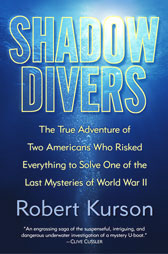
A non fiction book is is my next recommendation: I am revisiting a book I read a few years ago and have been surprised at the number of people who do not know about this book and should check it out- it is called Shadow Divers by Robert Kurson.

Kurson tells the true story  of the discovery  of a mysterious submarine shipwreck located off the coast of New Jersey. It is dangerously deep and accessible to only those who are experienced deep diving specialists like John Chatterton and Richie Kohler, wreck diving enthusiasts. These guys with a handful of other people ( all real characters) become committed to solving this unidentified submarine. The adventure takes us through the details of deep sea diving ( the risks and dangers), the history of WWII submarines, and all that is gained and lost in the pursuit of solving the identification of the U-boat. There is death, triumph, loss and satisfaction as they are able to return items to the relatives of the dead. Loved reading this story, riveting and wished it did not end.