The Language of Flowers by Vanessa Diffenbaugh

This book was recommended by Book Passage and I am glad I read it. The Language of Flowers is set in San Francisco and tells the story of Victoria, an emancipated foster child, who has spent her whole life in foster care. It shines a light on the cruelty of the foster care system and the abruptness in which the system dumps a young adult once they turn 18.  Victoria is happy to be free of the system and immediately pursues her passion: flowers. The image of this young woman who has not been nurtured save one foster mother who taught her about flowers is now nurturing the earth. The author does an excellent job conveying the challenges for foster children, especially the heartbreak. She speaks from experience as Diffenbach is an advocate for foster children and she was a foster mother. In fact, some of the proceeds from this book will go for the Camellia Network,  a support net(work) for youth aging out of foster care.
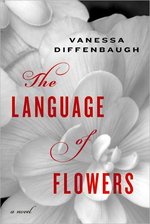
But  flowers are easier than people. Armed with  defense mechanisms because of the life she led in the foster care system, Victoria is a survivor. There is sadness, frustration and glimpses of hope. She attracts good people who want to be helpful, but for Victoria, help doesn’t look the same to her as it does to most people. She longs for connection and family but is afraid of loss so she is in limbo- wanting but rejecting. Victoria’s story is told in alternating chapters of her life now and the past. Slowly we find out the explosive story of what happened between Victoria and the foster mother who was planning to adopt her. The foster mother teaches her about flowers and unconditional love, but something happens to stop the adoption. The story is brutal and creates a Victoria who is not always likeable, but you understand.

“The overriding emotional message of “The Language of Flowers” has to do with family. Victoria desperately wants one. But she thinks that she is too damaged to learn how to love. A likelier outcome:  a great big bouquet of aster (patience), daffodil (new beginnings), honeysuckle (devotion), hyacinth (constancy) and moss (maternal love) will await her in the flowery future “( Maslin, September 7,2011, N.Y. Times Book Review).

There are several themes in the book. The book uses the language of flowers, a Victorian era method of communicating through flowers, and provides a flower dictionary for the reader in the back of the book. I learned alot about the meaning of flowers and Victoria’s skill at arranging flowers attracts many followers. Themes of homelessness, attachment disorder and foster care are just a few of the other topics. Yet, in spite of all the sadness and cruel twists it does leave you with hope. That’s my 2cents, Tracy.
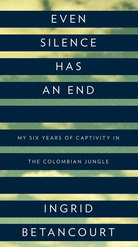
Even Silence has an End by Ingrid Betancourt

Even Silence has an End by  Ingrid Betancourt  (Born in Bogotá, raised in France, Betancourt at the age of thirty-two gave up a life of comfort and safety to return to Colombia to become a political leader in a country that was being slowly destroyed by terrorism, violence, fear, and a pervasive sense of hopelessness. In 2002, while campaigning as a candidate in the Colombian presidential elections, she was abducted by the FARC. Nothing could have prepared her for what came next. She would spend the next six and a half years in the depths of the jungle as a prisoner of the FARC. Even Silence Has an End is her deeply personal and moving account of that time. Chained day and night for much of her captivity, she never stopped dreaming of escape and, in fact, succeeded in getting away several times, always to be recaptured.) Took my breath away. I can’t imagine her experience and the days of waiting for rescue. The betrayal of her to the rebels is also an insight into petty and dangerous politics. Some of her comments are worth noting here from an NPR interview:

“We discovered that the jungle was another prison,” she says. “It was impossible to just get out.” But she kept trying, five times in all. And after her fifth attempt, the guards had had enough; they beat her severely and kept her chained by the neck to a tree, 24 hours a day.

The brutal treatment did not break Betancourt’s spirit. Over the six years of her captivity, her fellow hostages learned to adapt. They began to answer to numbers rather than names. They did what they could to survive. But Betancourt remained stubborn. “I had a problem,” she says. “I had this belief that I couldn’t just accept to be treated as an object. It was a problem of dignity.” She says her fellow hostages saw her behavior as arrogance or troublemaking. “But it wasn’t that. It was just that I couldn’t accept that they would call us by number, because I thought it would make it easier for them to kill us if they had to kill an object, a number.”

Betancourt didn’t want to make it easy on her captors, she says. She was fixated on the idea of escaping and returning to her children. But there were times, Betancourt says, when she thought she’d be stuck in the jungle forever. “The relationship with time changes when you’re captive. In the free world, your days pass very quickly because you have so many things to do, and you’re in control of your life.” But with the FARC, she says, the days were eternal.There were two states of extremes: boredom and the anxiety of what could happen. Betancourt says her time in captivity dispelled any romantic illusions she had about the FARC and their mission. “I am of a generation where we like Che Guevara, you know, the very romantic kind of revolution thing,” she says. “And in a way, I thought that the FARC was kind of a romantic rebellion against a system that I didn’t like either.”But in captivity, she says she came to realize that the FARC was nothing more than the military wing of Colombia’s drug cartels. “It was as corrupt as the system; it wasn’t a response to the problems we have in Colombia.” ( NPR, 9/ 25/10)

Hello Bookies

My first post.… my purpose with this blog is to share with you the books I love. As most of you know for the past 5 years I have been making summer and winter lists of my best book picks – in Adult Fiction & Non Fiction and now it has expanded to include Young Adult Books. Now I can share it all here  with you  and anybody else who is interested in what I am reading. Eventually, I will show you my working book for your feedback and pleasure ( I hope).

In addition to my book review posts, check out my book lists. If you recognize any books on my lists that you enjoyed, typically the rest of the list will appeal to your reading taste. I am always looking for book recommendations so send them my way! Thank you for visiting my site and listening to my 2 cents.

Tracy