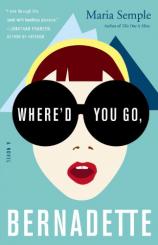
Where did you go Bernadette by Maria Semple

I really enjoyed this book, Where’d You Go, Bernadette by Maria Semple.  It is an engaging, clever story told by nasty e-mails, police, psychiatrist and school reports, narration from different characters, including the daughter, mother, father, neighbor and school parents.  Bee is short for Balakrishna, and the precocious teenager who as a middle school student has succeeded in getting straight A’s on her report card. Prior to her grades, Bee had extracted a promise from her parents that if she gets A’s she could have her wish granted-a trip with her parents to Antarctica. The day before the cruise to Antarctica, Bee’s mother disappears.

There is one small problem: Bee’s mother, Bernadette. The mother has complex issues about leaving on this trip including agoraphobia and  the inability to do the basics in daily activities, like tolerating other adults. Bernadette, the mother, requires and employs a virtual assistant from India who she pays 75 cents an hour to do grocery lists, order clothes, conduct her life. But the virtual assistant can’t run interference for Bernadette and the continual conflict she has with people. Bernadette loathes Seattle and all the quirks of Seattle people. In fact, I don’t believe Bernadette has agoraphobia as much as she just dislikes and is intolerant of  most people. She is a multilayered character who is funny, witty, an obsessive savant who won the MacArthur Award for architecture and creativity.  With her acidic tongue, the author/Bernadette makes fun of  the politically correct private school and Seattle at large. There are lots of laughs as we get to know these characters.

A bit contrived but entertaining, from the first page-the wise 14 year old and the flawed parents tell their side of the story as Bee tries to find her missing mother and begins to do the detective work. The author is a veteran screen writer for previous series: Arrested Development and Mad about You. The author  moved to Seattle from southern California and initially had to adjust to the lifestyle of the Northwest. The author likes Seattle now. That’s my 2 cents.

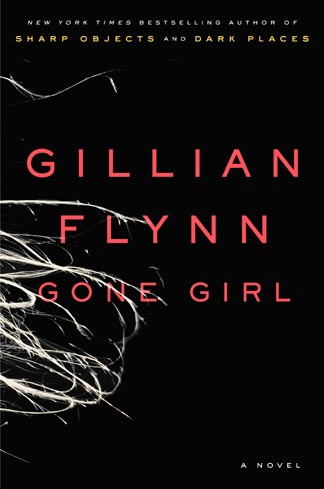
Gone Girl by Gillian Flynn

Wow. What did I expect….not quite this story.  Gone Girl by Gillian Flynn is about a marriage told from two perspectives, the husband and the wife. It begins with their courtship in New York, marriage and then five years later on their 5th anniversary the wife disappears from her kitchen. As we learn the background to this event, the characters emerge as not very like able. Nick, the husband, is the immediate suspect in his wife’s disappearance. He is evasive with secrets to hide. Amy, the wife, is beautiful, clever and leaves in her wake an incriminating treasure hunt “to celebrate” their anniversary. It is a compulsive read to the very end because you want to find out what really happened. The observations about married life and whether it is all good in this toxic relationship engages the reader. There is deception and you wonder who really is the victim in this story. Maybe they deserve each other… my 2 cents.

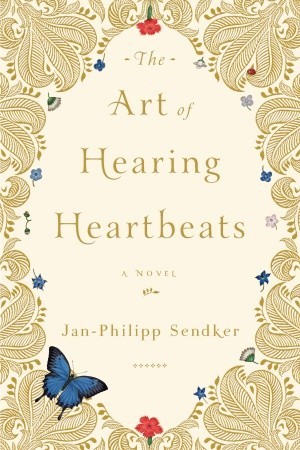
The Art of Hearing Heartbeats by Jan-Philipp Sendker

Please run to the nearest bookstore and buy: The Art of Hearing Heartbeats by Jan-Philipp Sendker. It is beautifully written and a sad but inspiring book. The day after Julie Win graduates from law school her father disappears without a trace. A few years later a letter is found in his belongings addressed to Mi Mi, a woman in Burma. It is a love letter. Julie decides to go to Burma to find out what happened to her father. Thus the tale begins….and there Julia learns about her father’s story.

Two of the main characters in The Art of Hearing Heartbeats, Tin Win and Mi Mi, have disabilities that allow them to see the world from a unique perspective”. It is their story that unfolds into a stunning love story. It is about love, loss, sacrifice,resilence, and the lessons we learn from joy, sorrow and life.

There was so much wisdom within the pages that my book copy is dog earred from all of the corners I turned down to relocate the precious comments I wanted to savor. The human condition is one of struggle but if you pay attention with all your senses your life will be better for it. This book changed my life. I will end with two thoughts that I came across in this book: first, “that there are wounds time does not heal, though it can reduce them to a managable size”( p.77).  Second, love has so many different faces that our imagination is not prepared to see them all…because we can only see what we already know”(p. 243). And of course that is my 2 cents for today,  Tracy.

Addendum to 2012 Summer Books to Read

Okay, this what happens every summer….I put a list of books out and then find more to read- so please add this to your first list of the 2012 bulletin of summer books to read. Note that many of the books listed are not yet published until July or August. Happy Reading! Tracy

Addendum: Bulletin Summer Books 2012

Adult Fiction

 The Art of Hearing Heartbeats by Sendker (A father disappears & leaves the family confused for years until one day they find an unmailed  love letter to a Burmese woman named Mi Mi. The oldest daught goes to Burma to unearth the puzzle.)

 Broken Harbor by French ( love her mysteries…a Dublin detective investigates the murder of a father and his children and faces his own disturbing incident in his past)

Eddie Signwriter, by Adam Schwartzman (Eddie finds that he’s a skilled artist, enabling him to work anywhere he goes. The story takes him from Botswana to Ghana, Senegal, and to Paris. What is he escaping? Who really loves him and on whom can he depend? Can he ever face his family again? Where is home? Opening like a murder mystery, we are slowly told Eddie’s story from different angles… Eddie’s real name is Kwasi Edward Michael Dankwa. His parents are from Ghana but he lived apart from his mother for many years in Botswana where his father is a professor.  As he is coming of age, his parents decide that he must live in Ghana in order to learn what it means to be Ghanaian, making him a foreigner in both countries.  Lyrical depictions of characters, scenery, and the environment of the African landscape as well as the immigrant existence in the Paris underground are remarkably written in a poetic yet uncomplicated style. This is a first novel for Schwartzman who previously published works of poetry.)

 Gone by Hanauer (this novel begins with the husband who disappears with the family’s babysitter – drama about the challenges of marriage and middle age)

 Gold by Cleave ( author of Little Bee, the new novel is about two girls who are friends and competitors going for Olympic gold in track cycling even as one of the girl’s sisters is battling leukemia.)

 Gone Girl  by Gillian Flynn- (a mystery starts with” marriage can be a killer”, about a couple who are celebrating their anniversary and the wife disappears, and the husband who manages the media circus and the scrutiny of public opinion that he is responsible for her disappearance )

 Kingdom of Strangers by Zoe Ferraris – ( mystery set in Saudi Arabia- lots of information about the culture of Saudi Arabia, women & rules)

 The Red House By Haddon ( an extended family gathers for a weekend in the English countryside with the inlaws.)

 Seating Arrangements by Shipstead ( animated summer read- a new England island,an elaborate wedding [albeit shotgun], drunken escapades, and decades old slights and grudges).

Where’d you Go by Semple ( a comic caper, full of heart…8th grader Bee has one request from her parents for having good grades: a cruise to Antarctica. Bee’s parents- father genius employed by Microsoft and mother a famous architect who is severely disabled by societal anxiety. The parents agree but the day before the trip her mother disappears. Bee gathers all of her mother’s e-mails, emergency bills and tries to figure out where her mother has gone. Written by one of the writers from Arrested Development.)


Non Fiction

Murder and Mayhem in Jefferson County by Farnsworth (is the understated title of a respectable collection of true crime tales set in Jefferson County, New York. In the 19th century, Jefferson County was a rugged locale occupied by hardworking farmers, upstanding citizens and just a few vicious murderers. The depraved deeds of this criminal minority are related in this short but entertaining book.)


No Time to Lose by Piot (When Peter Piot was in medical school, a professor warned, “There’s no future in infectious diseases. They’ve all been solved.” Fortunately, Piot ignored him, and the result has been an exceptional, adventure-filled career. In the 1970s, as a young man, Piot was sent to Central Africa as part of a team tasked with identifying a grisly new virus. Crossing into the quarantine zone on the most dangerous missions, he studied local customs to determine how this disease—the Ebola virus—was spreading. Later, Piot found himself in the field again when another mysterious epidemic broke out: AIDS. He traveled throughout Africa, leading the first international AIDS initiatives there. Then, as founder and director of UNAIDS, he negotiated policies with leaders from Fidel Castro to Thabo Mbeki and helped turn the tide of the epidemic. Candid and engrossing, No Time to Lose captures the urgency and excitement of being on the front lines in the fight against today’s deadliest diseases.)

People Eating Darkness by Parry (“The true story about a young woman who vanishes on the streets of Tokyo and the evil that swallowed her”)

What to Look For in Winter by McWilliam ( a memoir- she is “ blind, 6 foot tall & afraid of small people, an alcoholic, a Scot.” Her story of losing her sight at 51, a mother who killed herself when she was 9 , and  lives alone but is cared for by her second husband  & his partner and ex-husband and his wife and by her own children- a commentary about who she is. On my list to read) 

Yes, Chef   by Samuelsson (chef’s incredible life story, losing his Ethiopian mother, adopted by a Swedish family and to becoming a top chef. “ I have never seen a picture of my mother”…is how the novel begins)

YA

172 hours on the Moon by Harstad

The premise of the book is interesting: NASA organizing a returntrip to the moon in 2017, with 5 astronauts and 3 “lucky” teenagers who win their place on the trip in a world lottery. Publically, NASA is returning to find minerals, privately it is to check on a secret module left from the 1970’s and another very dark secret. The problem with the book is it is technically flawed and unbelievable  even in today’s technology and training of astronauts. A little too much drama in the wrong places in this book- that said I still could not put it down- I wanted to know!!!! Tracy ….…..56 going on 14 (MB1
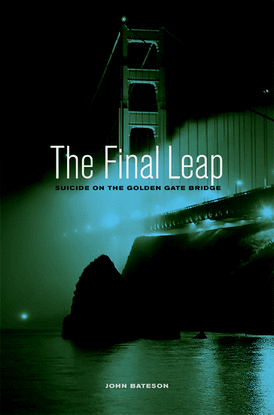
The Final Leap, Suicide on the Golden Gate Bridge by John Bateson

The Final Leap by Bateson is about the Golden Gate Bridge and its legacy as the suicide destination. The bridge is beautiful but deadly. Bateson explores the history of the Bridge and the 1500 plus people who have taken their life by jumping from the Golden Gate Bridge. He weaves the drama, the tragedies and the politics of the bridge. I learned many facts I was unaware of- the San Francisco coroner will not rule a death a suicide unless the act is witnessed; the autopsy will say death by fall. Marin County coroner on the other side will rule  a death a suicide if the body is located in the water by the bridge and there is evidence that supports death by a fall.

An interesting fact is that for the small percent of jumpers that survived, there were no further suicide attempts by them. Those who jumped and survived reported immediate regret for jumping. Most survivors jumped because it “required no planning…didn’t need to procure a gun, hoard pills, get a rope, and did not have to worry about leaving a mess at the scene” (page.16). Motivation and the bridge make it easy with its design plus, the refusal of officials to place a safety barrier, as noted by the opinion piece below:

“The Golden Gate Bridge is a public health hazard; it doesn’t have adequate safety barriers. The Eiffel Tower, the Empire  State Building, St. Peter’s Basilica, the Duomo in Florence, the Sydney  Harbour Bridge and many other international landmarks have suicide barriers. But  not the Golden Gate Bridge.

Ironically, the original design called for a higher railing along the walkways specifically to prevent suicides. In a last-minute decision, however, the railing was lowered to enhance the view. As a result, almost anyone can climb over it, from a 5-year-old girl (the bridge’s youngest suicide, in 1945) to the 75-year-old overweight woman who jumped in 2005. Or be thrown over it: Three children were murdered that way by their fathers, who jumped after them to  their deaths (one in 1964 and two in 1993).

In 2008, bridge district officials finally voted to add a suicide deterrent to the bridge: a marine-grade stainless steel net that will stretch 20 feet below the walkways. It won’t be much different than the net that the bridge’s chief engineer, Joseph Strauss, installed to protect workers during construction — a net that saved 19 men” (Los Angeles Times May 25, 2012).

This book changed my opinion. As a psychiatric nurse who witnessed the determination of  many to kill themselves, I did not think the barrier proposed for the Bridge to prevent suicides would make a difference.  People committed to dying will still try to kill themselves but just at another location. But a barrier or net would save lives and will not cost anything to the beauty of the bridge.

Bateson writes from many perspectives- the coroners, the coast guards, the police, the families of the victims, the counselors, the survivors who somehow miraculously  live despite the fall,a movie producer who filmed the suicides on the Golden Gate  for a year, and witnesses. The anatomy of the injuries that are sustained from a fall of that height: 220 feet, 4 seconds from the bridge to the bay. The Bridge is a documentary about the suicides  captured by film over a one year period and the footage highlights the  impulsivity. I went to the author’s reading and discussion of his book at Book Passage was touched by his compassion and methodical presentation  of why there needs to be a barrier to stop suicides. I agree…that’s my 2cents, Tracy.

The Language of Flowers by Vanessa Diffenbaugh

This book was recommended by Book Passage and I am glad I read it. The Language of Flowers is set in San Francisco and tells the story of Victoria, an emancipated foster child, who has spent her whole life in foster care. It shines a light on the cruelty of the foster care system and the abruptness in which the system dumps a young adult once they turn 18.  Victoria is happy to be free of the system and immediately pursues her passion: flowers. The image of this young woman who has not been nurtured save one foster mother who taught her about flowers is now nurturing the earth. The author does an excellent job conveying the challenges for foster children, especially the heartbreak. She speaks from experience as Diffenbach is an advocate for foster children and she was a foster mother. In fact, some of the proceeds from this book will go for the Camellia Network,  a support net(work) for youth aging out of foster care.

But  flowers are easier than people. Armed with  defense mechanisms because of the life she led in the foster care system, Victoria is a survivor. There is sadness, frustration and glimpses of hope. She attracts good people who want to be helpful, but for Victoria, help doesn’t look the same to her as it does to most people. She longs for connection and family but is afraid of loss so she is in limbo- wanting but rejecting. Victoria’s story is told in alternating chapters of her life now and the past. Slowly we find out the explosive story of what happened between Victoria and the foster mother who was planning to adopt her. The foster mother teaches her about flowers and unconditional love, but something happens to stop the adoption. The story is brutal and creates a Victoria who is not always likeable, but you understand.

“The overriding emotional message of “The Language of Flowers” has to do with family. Victoria desperately wants one. But she thinks that she is too damaged to learn how to love. A likelier outcome:  a great big bouquet of aster (patience), daffodil (new beginnings), honeysuckle (devotion), hyacinth (constancy) and moss (maternal love) will await her in the flowery future “( Maslin, September 7,2011, N.Y. Times Book Review).

There are several themes in the book. The book uses the language of flowers, a Victorian era method of communicating through flowers, and provides a flower dictionary for the reader in the back of the book. I learned alot about the meaning of flowers and Victoria’s skill at arranging flowers attracts many followers. Themes of homelessness, attachment disorder and foster care are just a few of the other topics. Yet, in spite of all the sadness and cruel twists it does leave you with hope. That’s my 2cents, Tracy.

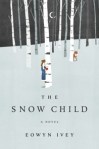
The Snow Child by Eowen Ivey

Wow! Read the Snow Child by Eowen Ivey. This story is part Russian fairy tale and part history of homesteading in Alaska in the 1920s.  Set in the beautiful but hostile terrain of Alaska, Mabel and Jack arrive at their new home with the hope and the plan to start over, to leave the pain and sadness of infertility, loss and begin again. Very slowly as they tame the land they find each other again and recapture their love.

At the beginning of the book in the first snow the couple playfully build a snow child. The next morning the snowman is gone, but left behind are a child’s footprints that lead into the woods. Later that evening a young girl shows up on their doorstep. “Wild, secretive, this little girl, who calls herself Faina, seems to be a child of the woods. She hunts with a red fox at her side, skims lightly across the snow, and leaves blizzards in her wake. As Jack and Mabel try to understand this child who seems to have stepped from the pages of a fairy tale, they come to love her as their own daughter. But in the Alaska wilderness, life and death are inextricable, and what they eventually learn about Faina changes their lives forever” (Ivey, The Snow Child ).

The magic in this story is that things do not end up where you think they will, and I liked that the story moved in directions I did not expect. Ivey’s writing captured my senses. I felt the cold crispness of the winter and the isolation experienced by the people who inhabited this frontier.  She is able to convey the interdependence we have on each other and the land. Ivey creates the warmth of a fire on a cold night and the comfort taken by the neighbors on the hearth of friendship. I learned that there is magic in simple things and the support of each other.

And that is my 2 cents, Tracy.

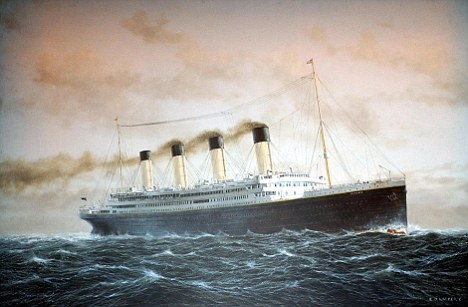
Shadow of the Titanic by Andrew Wilson

Reading this non fiction book seemed very timely given my recent review of fiction book The Lifeboat by Rogan (post 4/18/12).  Shadow of the Titanic is a fascinating story about what happened to all of the survivors from the Titanic. There were 705 survivors and very little has been written on what happened to these survivors. Andrew Wilson, the author, cites unpublished letters, diaries, and interviews with survivors’ family members to tell us about the many ways the Titanic “shadowed” the men, women and children who lived through that disaster. Some of the survivors were so racked with guilt they spend the rest of their lives under the “shadow of the Titanic”, thus the title. Yes, there were the  rich and famous, but so many people from all walks of life were traumatized by the loss  of the Titanic, a few even committed suicide.

Another aspect of the disaster was that with the shortage of lifeboats it was a given that women and children were suppose to be first in the lifeboats. It was an unwritten rule that men would go down with the ship, not just the captain and crew, but that a true gentleman would be guided by this rule. There were men whose reputations were destroyed because they did not go down with the ship. The public scrutiny of the survivors in the aftermath of this tragedy makes for  a very interesting read and I recommend it.

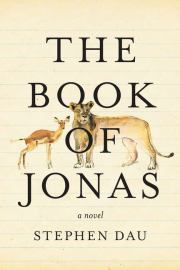
The Book of Jonas by Stephen Dau

‘What is it like to lose everything”? This is the opening question in this  debut fiction book written by Stephen Dau called The Book Of Jonas. Younis is is a 15 year old boy who has lost his village, family and country. He survives the  destruction of his village and is saved by an American soldier. Younis eventually is granted “haven” in the USA with a foster family and changes his name to Jonas.

The sparse prose details the loss, the assimilation and diaspora of this refugee who lives in America, so far away from his homeland.The recovery of his lost memory is guided by his court ordered therapist and by the introduction to the mother of the soldier that saved his life. The mother, Rose, is desperate to find out what happened to her son who went missing after the fight. She wants to know what he can remember and Younis / Jonas is reluctant, and resistant to remember. He has a secret and the book marches the reader to this past that holds the key to his memory. The mystery of the missing soldier, the traps of memory  and the fallout of war are covered in this novel. Also note the story told about the lion and the baby gazelle, a metaphor for the comfort and cruelty of life.Dau does an excellent job of conveying the disconnect for Younis and I am haunted by his story. And that is my 2 cents…


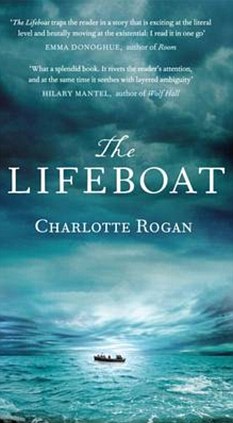
The Lifeboat by Charlotte Rogan

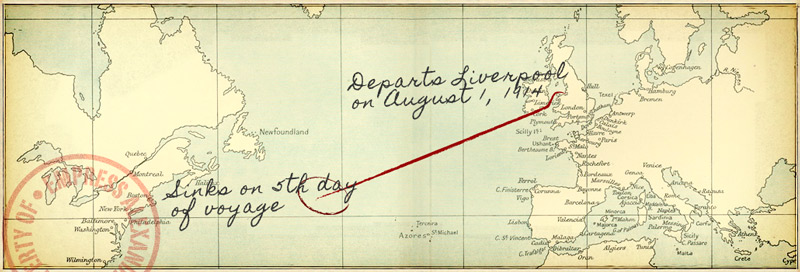
The Life Boat by  Charlotte Rogan just happens to be published at the  100th anniversary of the sinking of the Titanic. There are some similarities in this story to the Titanic as this is also about a luxury liner crossing the Atlantic in 1914 and it sinks. The story departs from the Titanic at the sinking and forks to a different story line- the survivors on an overcrowded lifeboat and the choices that are made. When the Titanic sank, all survivors in lifeboats were picked up within six hours, not true for this ship, the Empress Alexandra, whose survivors wait almost 21 days for rescue and the drama that unfolds is what captures the reader.

Told by 22 year old Grace who through manipulation and good fortune has married a wealthy man to flee her circumstances of poverty. Her husband Henry’s last act is forcing a place for Grace on an overcrowded lifeboat. Grace narrates the events on  Lifeboat  14 as they wait to be rescued.  The passengers on Lifeboat 14  face decisions for survival and  sacrifice for the good of the whole.  At first  John Hardie , one of the crew from the ship, takes charge of the boat by redistributing the weight in the overcrowded boat, and instructing the  passengers to row. Yet, his directions don’t stop there.  A disturbing image is his decision to abandon adults and a child to certain death in the ocean, in some cases beating them to stay away from their lifeboat, while the passengers protest yet remain passive. The choices become more personal as Hardie has men draw straws for who must sacrifice their life by jumping off the lifeboat so  food and space could be provided for the remainder- killing some for the good of the others. What choice would you make if you were in their situation? Are you guilty if you don’t stop an act of murder?

“Grace realizes that her survival could depend on whether she backs the ruthless but experienced John Hardie or the enigmatic but increasingly forceful Ursula Grant. Over the course of three perilous weeks, the lifeboat passengers plot, scheme, gossip and console one another while questioning their deepest assumptions about goodness, humanity and God” ( Rogan, The Lifeboat, 2012 ). As the lifeboat drifts at sea, the desperation, doubt and fear drive the survivors into a mutiny, those who act and those who remain  silent and thus complicit, as a murder takes place.

“Grace is finally rescued, only to be put on trial for her life. Unsure what to make of their client, Grace’s attorneys suggest she write her story down. The result is a page-turning tale of moral dilemmas, and also a haunting portrait of a woman as unforgettable and complicated as the events she describes” ( Rogan, The Lifeboat , 2012).