A yellow bird
With a yellow bill
Was perched upon
My windowsill
I lured him in
With a piece of bread 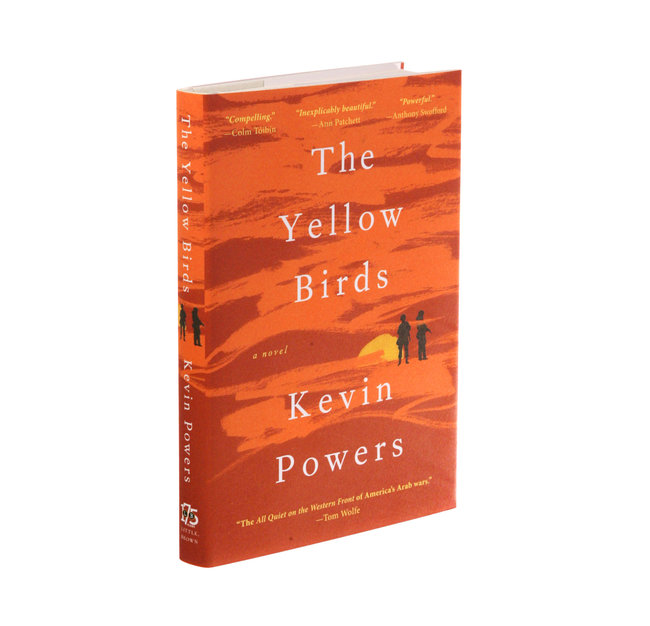
And then I smashed
His fucking head…
The opening of the book starts with this Traditional U.S. Army Marching Cadence which says it all: it foreshadows the tone of the story — beautiful prose, but the content of war stinks and can’t be disguised by pretty words. This book has haunted me. The Yellow Birds by Kevin Powers is fiction but the author’s life history indicates that he writes from experience. Kevin Powers did two tours of duty in Iraq. He captures the rhythm, the chaos, the intensity, the exhaustion and boredom in war. The story is about 21 year old Private John Bartle and Private Daniel Murphy, 18 years old, who are in the same battalion. Prior to shipping out to Iraq, the mother of Murphy extracts a promise from Bartle that he will bring Murphy home alive, and take care of him on the front. The promise which is overheard by his commanding officer is immediately addressed by the officer. “Don’t ever make that kind of promise”. The “Sarge” then punches him in the face. The stage is now set and we anxiously wait to see how Bartle breaks his promise and what happens to Murphy.
One of the main characters is Sargent Sterling, a hardened veteran of war, and he serves to warn his men about the terrain of war — the skills you need to abide by in order to survive. There is a point in the book when Bartle recognizes that Murphy is “not himself”. Sterling shares with Bartle that when your head is back home (and you are not then focused on surviving the war) you end up going home dead. The Sargent warns that you have to be a deviant or have an edge to survive — a quality Bartle has, but Murphy does not. Murphy is too sensitive to the exercises of war and becomes a broken man.
One of the things I learned from this book is the role of marching cadences, how they rally troops, reflect the times and provide music. It is fascinating to read some of the marching tunes because they reflect the membership of war. It is also fascinating to read the words written by this talented author-as said in his opening line: “The war tried to kill us that spring”. The story “lures” the reader in and “smashes” your head with the sad reality of war.
 Tracy's 2 Cents